tagrfid business cards - Official Website
# RFID Business Cards: Revolutionizing Networking in the Digital Age
## Introduction to RFID Business Cards
In today's fast-paced digital world, traditional paper business cards often fall short. They get lost, damaged, or forgotten in wallets and drawers. Enter **RFID business cards** – a innovative solution that merges physical networking with digital convenience. These smart cards utilize Radio-Frequency Identification (RFID) technology to store and transmit contact information wirelessly, transforming how professionals connect and share data.
## How RFID Business Cards Work
 ### The Technology Behind the Innovation
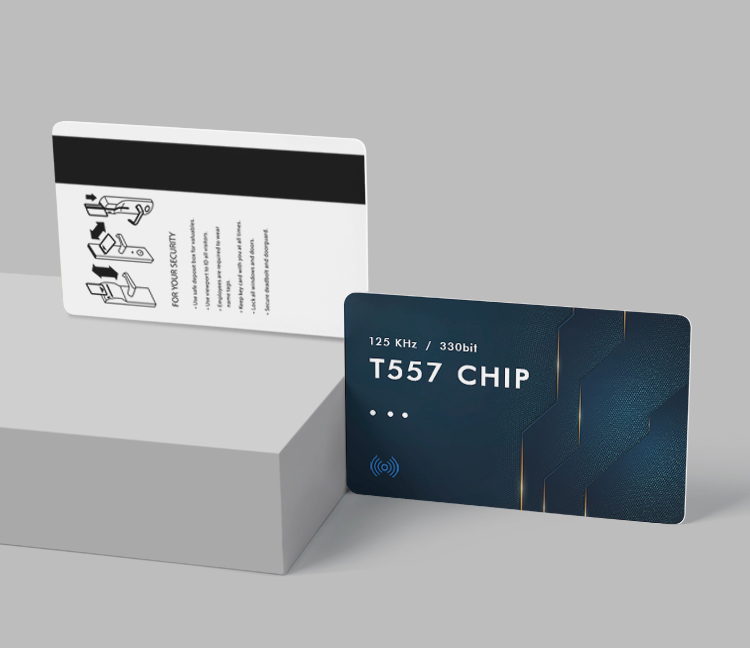
 **RFID business cards** contain a tiny microchip and antenna embedded within the card material. When brought near an RFID reader (which can be a smartphone with NFC capabilities or a dedicated reader), the chip draws power from the reader's electromagnetic field and transmits stored data. This process, known as inductive coupling, enables seamless information exchange without physical contact or line-of-sight requirements.
 From my personal experience at tech conferences, using **RFID business cards** has dramatically improved my networking efficiency. I recall one particular interaction at a blockchain summit where I simply tapped my card against a potential collaborator's phone. Within seconds, my full contact details, portfolio link, and even a personalized introductory message appeared on their device. The look of impressed surprise on their face confirmed that this wasn't just a gimmick – it was a genuinely superior networking tool that made the exchange memorable and effortless.
 ## Technical Specifications of RFID Business Cards
### Detailed Technical Parameters
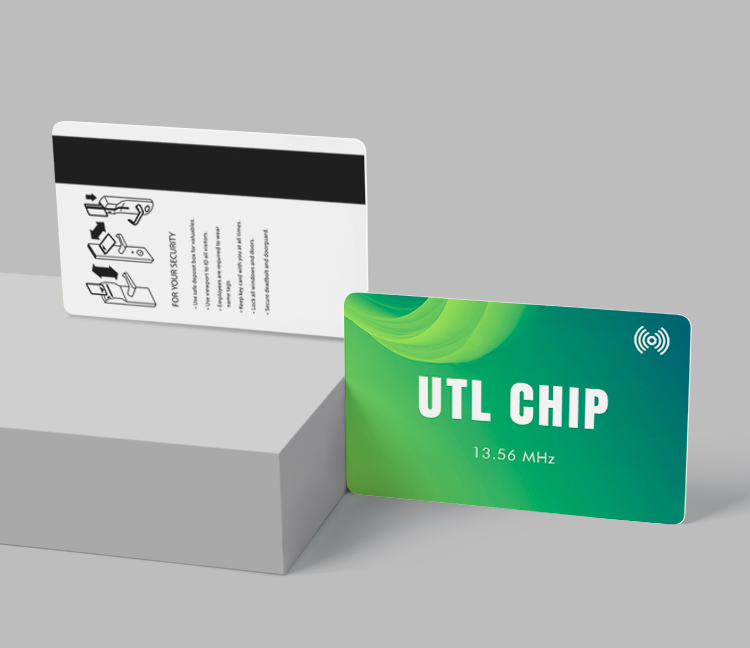
**RFID business cards** typically utilize high-frequency (HF) RFID technology operating at 13.56 MHz, compatible with Near Field Communication (NFC) standards. The embedded chips commonly used include:
## Technical Specifications of RFID Business Cards
### Detailed Technical Parameters
**RFID business cards** typically utilize high-frequency (HF) RFID technology operating at 13.56 MHz, compatible with Near Field Communication (NFC) standards. The embedded chips commonly used include:
 - **NXP NTAG213**: 144 bytes user memory, 7-byte UID
- **NXP NTAG215**: 504 bytes user memory, 7-byte UID
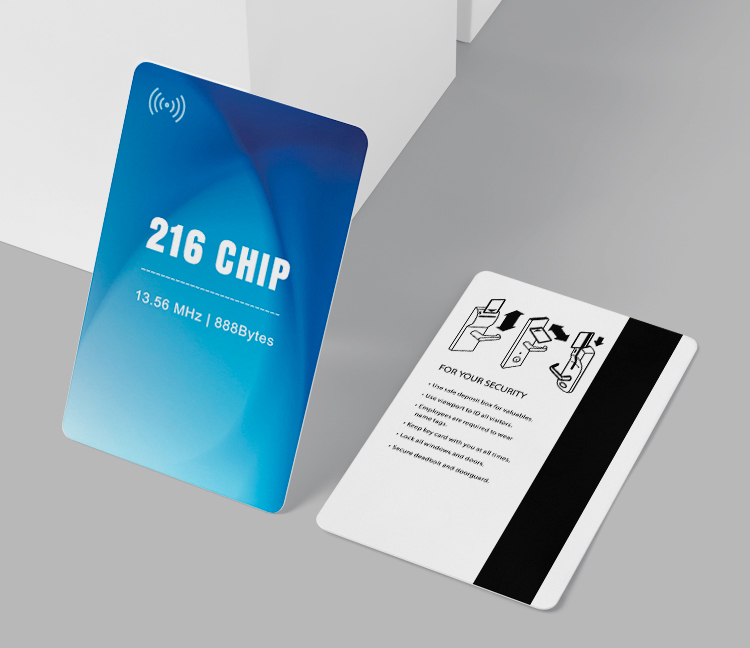
- **NXP NTAG216**: 888 bytes user memory, 7-byte UID
- **STMicroelectronics ST25TA**: 64 bytes to 8KB memory options
Standard card dimensions follow ISO/IEC 7810 ID-1 format: 85.6 × 54 × 0.76 mm. The embedded antenna typically measures 70 × 40 mm with copper or aluminum etching, operating with a read range of 1-10 cm depending on antenna design and reader sensitivity.
*Note: These technical parameters are reference data. For specific r
- **NXP NTAG213**: 144 bytes user memory, 7-byte UID
- **NXP NTAG215**: 504 bytes user memory, 7-byte UID
- **NXP NTAG216**: 888 bytes user memory, 7-byte UID
- **STMicroelectronics ST25TA**: 64 bytes to 8KB memory options
Standard card dimensions follow ISO/IEC 7810 ID-1 format: 85.6 × 54 × 0.76 mm. The embedded antenna typically measures 70 × 40 mm with copper or aluminum etching, operating with a read range of 1-10 cm depending on antenna design and reader sensitivity.
*Note: These technical parameters are reference data. For specific r