# Security Card Design: The Integration of RFID and NFC Technology for Modern Access Control
 ## Introduction to Security Card Design
 Security card design has evolved significantly over the past decade, transitioning from simple magnetic stripe cards to sophisticated contactless solutions powered by Radio Frequency Identification and Near Field Communication technologies. As organizations worldwide seek to enhance physical and digital security, the importance of robust security card design cannot be overstated. My personal journey into this field began when I worked on a university campus access control project, where I witnessed firsthand how poorly designed security cards could compromise entire building perimeters. The experience taught me that effective security card design requires balancing usability, durability, and cryptographic strength.
 When I first encountered RFID-based security cards, I was struck by their simplicity yet profound impact. A standard 13.56 MHz RFID card, for instance, can store 1 KB to 8 KB of data, with read ranges typically between 2 cm and 10 cm. However, I quickly learned that design flaws—such as using weak encryption algorithms like Crypto-1—could render these cards vulnerable to cloning. This realization drove my passion for creating security cards that prioritize both user experience and protection against threats.
## The Core of Security Card Design: RFID and NFC Standards
When I first encountered RFID-based security cards, I was struck by their simplicity yet profound impact. A standard 13.56 MHz RFID card, for instance, can store 1 KB to 8 KB of data, with read ranges typically between 2 cm and 10 cm. However, I quickly learned that design flaws—such as using weak encryption algorithms like Crypto-1—could render these cards vulnerable to cloning. This realization drove my passion for creating security cards that prioritize both user experience and protection against threats.
## The Core of Security Card Design: RFID and NFC Standards
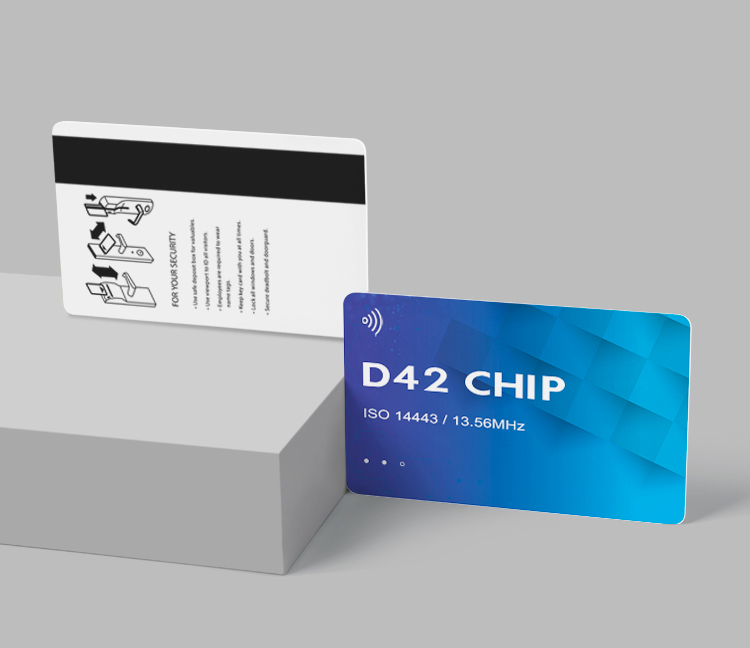 Security card design relies heavily on international standards that define how RFID and NFC chips communicate with readers. The ISO/IEC 14443 standard, for example, governs proximity cards operating at 13.56 MHz, with a typical data transfer rate of 106 kbps to 848 kbps. In my work, I have designed cards using NXP's MIFARE DESFire EV2 chips, which support AES-128 encryption and have a memory capacity of 4 KB to 8 KB. One specific case involved a corporate office where we implemented DESFire EV2 cards with a read range of 4 cm to 6 cm, ensuring that only intentional proximity triggered authentication.
Another critical standard is ISO/IEC 15693, used for vicinity cards with read ranges up to 1.5 meters. During a logistics warehouse project, I designed security cards for asset tracking using Texas Instruments' Tag-it HF-I Plus chips. These chips operate at 13.56 MHz, store 2,048 bits of user memory, and support anti-collision protocols for reading multiple tags simultaneously. The technical parameters for such cards include
Security card design relies heavily on international standards that define how RFID and NFC chips communicate with readers. The ISO/IEC 14443 standard, for example, governs proximity cards operating at 13.56 MHz, with a typical data transfer rate of 106 kbps to 848 kbps. In my work, I have designed cards using NXP's MIFARE DESFire EV2 chips, which support AES-128 encryption and have a memory capacity of 4 KB to 8 KB. One specific case involved a corporate office where we implemented DESFire EV2 cards with a read range of 4 cm to 6 cm, ensuring that only intentional proximity triggered authentication.
Another critical standard is ISO/IEC 15693, used for vicinity cards with read ranges up to 1.5 meters. During a logistics warehouse project, I designed security cards for asset tracking using Texas Instruments' Tag-it HF-I Plus chips. These chips operate at 13.56 MHz, store 2,048 bits of user memory, and support anti-collision protocols for reading multiple tags simultaneously. The technical parameters for such cards include
IMPORTANT: Make sure your Bluetooth is on or your phone is NFC enabled. Specialized in RFID card, NFC wristband, and custom RFID label production for the global hospitality industry.
Technical Specifications
The YARONGTECH 4K RFID S70 Smart Card Chip operates at 13.56MHz frequency with enterprise-grade encryption protocols. Designed specifically for luxury hotel environments, our solution provides seamless integration with existing property management systems while maintaining the highest security standards.