rfid card amazon - Speak To An Expert
Premium RFID Solutions for Modern Hotels
<h1>RFID Card Amazon: Revolutionizing Retail and Beyond</h1>
 <h2>Introduction to RFID Technology and Amazon's Integration</h2>
The <strong>RFID card Amazon</strong> ecosystem represents a significant leap in how we interact with products, payments, and data. As a technology enthusiast, I've always been fascinated by the seamless magic of RFID (Radio-Frequency Identification). My personal journey with this began not in a warehouse, but at a marathon. I volunteered for packet pickup, and instead of manually checking off thousands of names from a crumpled list, we used <strong>RFID card</strong> wristbands. A simple tap on a tablet confirmed registration and handed over the race bib. The speed and accuracy were astounding, eliminating a huge bottleneck. This firsthand experience with the practical power of RFID made me acutely aware of its potential, a potential that Amazon is masterfully harnessing.
<h3>How Amazon Utilizes RFID Card Technology</h3>
Amazon employs <strong>RFID card</strong> and tag systems across its vast empire, from its fulfillment centers to its physical retail concepts like Amazon Go and Amazon Fresh. In warehouses, every item, pallet, and bin can be tagged. As they move on conveyors or via robots, fixed readers automatically track their location in real-time. This drastically reduces lost inventory and speeds up the sorting and shipping process. For the consumer, the most visible application is in the "Just Walk Out" technology. Here, <strong>RFID card</strong> principles, combined with computer vision and sensor fusion, allow you to pick items and leave the store, with your Amazon account charged automatically. It turns a shopping trip into a uniquely frictionless experience.
<h4>The Technical Core: Inside an RFID Card</h4>
To understand the <strong>RFID card Amazon</strong> relies on, we must look under the hood. An RFID system consists of a tag (or card) and a reader. The tag contains a microchip and an antenna. The chip stores data, such as a unique identification number. When the tag comes into the electromagnetic field generated by the reader's antenna, it gets powered (in passive systems) and transmits its data back.
<h2>Introduction to RFID Technology and Amazon's Integration</h2>
The <strong>RFID card Amazon</strong> ecosystem represents a significant leap in how we interact with products, payments, and data. As a technology enthusiast, I've always been fascinated by the seamless magic of RFID (Radio-Frequency Identification). My personal journey with this began not in a warehouse, but at a marathon. I volunteered for packet pickup, and instead of manually checking off thousands of names from a crumpled list, we used <strong>RFID card</strong> wristbands. A simple tap on a tablet confirmed registration and handed over the race bib. The speed and accuracy were astounding, eliminating a huge bottleneck. This firsthand experience with the practical power of RFID made me acutely aware of its potential, a potential that Amazon is masterfully harnessing.
<h3>How Amazon Utilizes RFID Card Technology</h3>
Amazon employs <strong>RFID card</strong> and tag systems across its vast empire, from its fulfillment centers to its physical retail concepts like Amazon Go and Amazon Fresh. In warehouses, every item, pallet, and bin can be tagged. As they move on conveyors or via robots, fixed readers automatically track their location in real-time. This drastically reduces lost inventory and speeds up the sorting and shipping process. For the consumer, the most visible application is in the "Just Walk Out" technology. Here, <strong>RFID card</strong> principles, combined with computer vision and sensor fusion, allow you to pick items and leave the store, with your Amazon account charged automatically. It turns a shopping trip into a uniquely frictionless experience.
<h4>The Technical Core: Inside an RFID Card</h4>
To understand the <strong>RFID card Amazon</strong> relies on, we must look under the hood. An RFID system consists of a tag (or card) and a reader. The tag contains a microchip and an antenna. The chip stores data, such as a unique identification number. When the tag comes into the electromagnetic field generated by the reader's antenna, it gets powered (in passive systems) and transmits its data back.
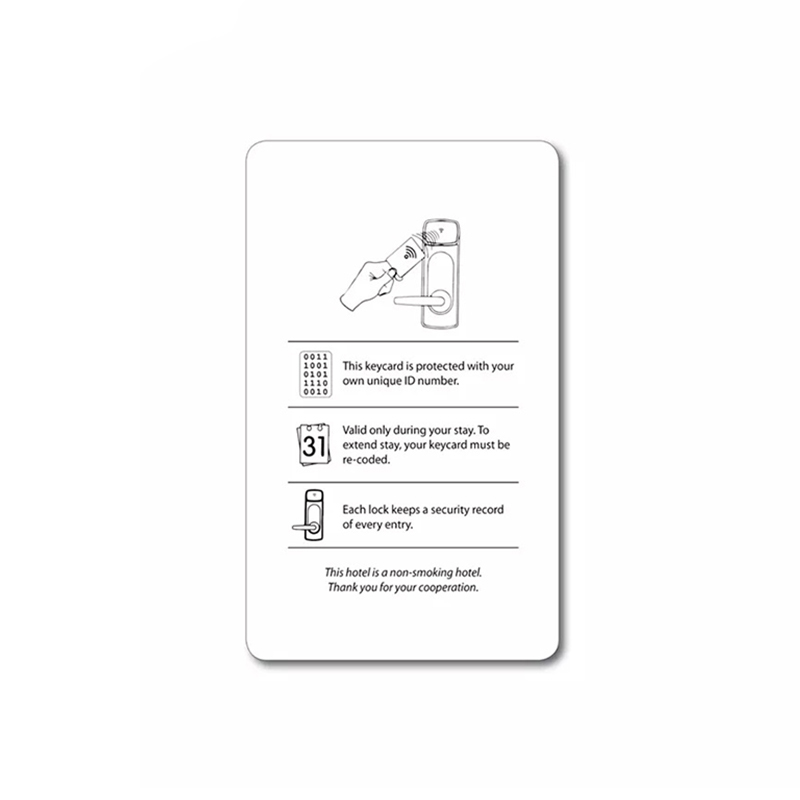

 Here are some detailed technical specifications for a typical high-frequency (HF) RFID card, common in access control and payment systems, which illustrates the technology foundational to many applications:
* **Frequency:** 13.56 M
Here are some detailed technical specifications for a typical high-frequency (HF) RFID card, common in access control and payment systems, which illustrates the technology foundational to many applications:
* **Frequency:** 13.56 M
Make sure your Bluetooth is on or your phone is NFC enabled. Specialized in RFID card, NFC wristband, and custom RFID label production for the global hospitality industry.