print on plastic card
# RFID Technology in Plastic Card Printing: A Comprehensive Guide for Secure Identification Solutions
## Introduction to RFID in Plastic Card Printing
**RFID** (Radio-Frequency Identification) technology has revolutionized the plastic card printing industry, enabling contactless data exchange, enhanced security, and streamlined authentication processes. From access control cards to payment systems, RFID-enabled plastic cards are now ubiquitous in modern infrastructure. This article delves into the technical specifications, real-world applications, and personal insights into how RFID is integrated into plastic card printing, while addressing common challenges and solutions.
As someone who has worked extensively with RFID card production, I can attest to the transformative power of this technology. My first encounter with RFID was during a project for a university campus access system. We needed to print 10,000 plastic cards with embedded RFID chips, and the process required precise alignment between the chip placement and the printed design. That experience taught me the importance of understanding both the hardware and software aspects of RFID card printing.
 ## Technical Specifications of RFID Plastic Cards
 RFID plastic cards are typically manufactured using PVC or composite materials, with an embedded microchip and antenna. Below are the key technical parameters for a standard high-frequency (HF) RFID card used in access control and payment systems:
- **Operating Frequency**: 13.56 MHz (ISO/IEC 14443 Type A/B compliant)
- **Chip Type**: NXP MIFARE Classic 1K (or equivalent, such as NXP NTAG213)
- **Memory Size**: 1,024 bytes (organized into 16 sectors with 64 bytes each)
RFID plastic cards are typically manufactured using PVC or composite materials, with an embedded microchip and antenna. Below are the key technical parameters for a standard high-frequency (HF) RFID card used in access control and payment systems:
- **Operating Frequency**: 13.56 MHz (ISO/IEC 14443 Type A/B compliant)
- **Chip Type**: NXP MIFARE Classic 1K (or equivalent, such as NXP NTAG213)
- **Memory Size**: 1,024 bytes (organized into 16 sectors with 64 bytes each)
 - **Read Range**: 2.5 cm to 10 cm (depending on reader power and antenna design)
- **Data Transfer Rate**: 106 kbps (for MIFARE Classic)
- **Antenna Dimensions**: 72 mm x 42 mm (typical for credit card size, 85.60 mm x 53.98 mm)
- **Card Thickness**: 0.76 mm to 0.84 mm (ISO/IEC 7810 ID-1 standard)
- **Operating Temperature**: -25°C to +50°C
- **Read Range**: 2.5 cm to 10 cm (depending on reader power and antenna design)
- **Data Transfer Rate**: 106 kbps (for MIFARE Classic)
- **Antenna Dimensions**: 72 mm x 42 mm (typical for credit card size, 85.60 mm x 53.98 mm)
- **Card Thickness**: 0.76 mm to 0.84 mm (ISO/IEC 7810 ID-1 standard)
- **Operating Temperature**: -25°C to +50°C
 - **Write Endurance**: 100,000 cycles (for MIFARE Classic)
- **Data Retention**: 10 years minimum
- **Write Endurance**: 100,000 cycles (for MIFARE Classic)
- **Data Retention**: 10 years minimum
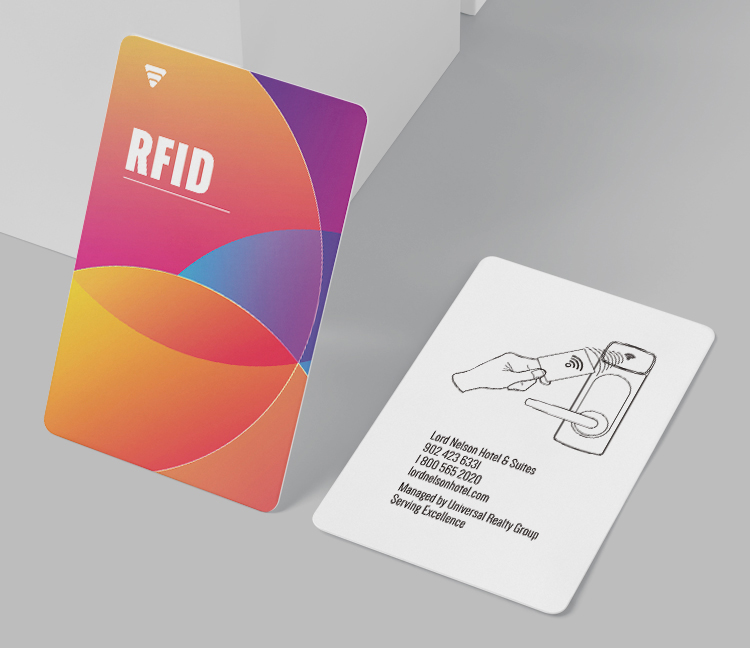 *Note: The above technical par